Color Blindness in the Classroom: Accommodations for Colorblind Students

A practical guide to supporting colorblind students, with 504 plan accommodations you can copy and quick fixes for Google Docs, Slides and Classroom.

Find out more about
Assistive Technology
Will Jackson, CEO
2026-11-11
, last updated on
2026-11-11
,
4
min read

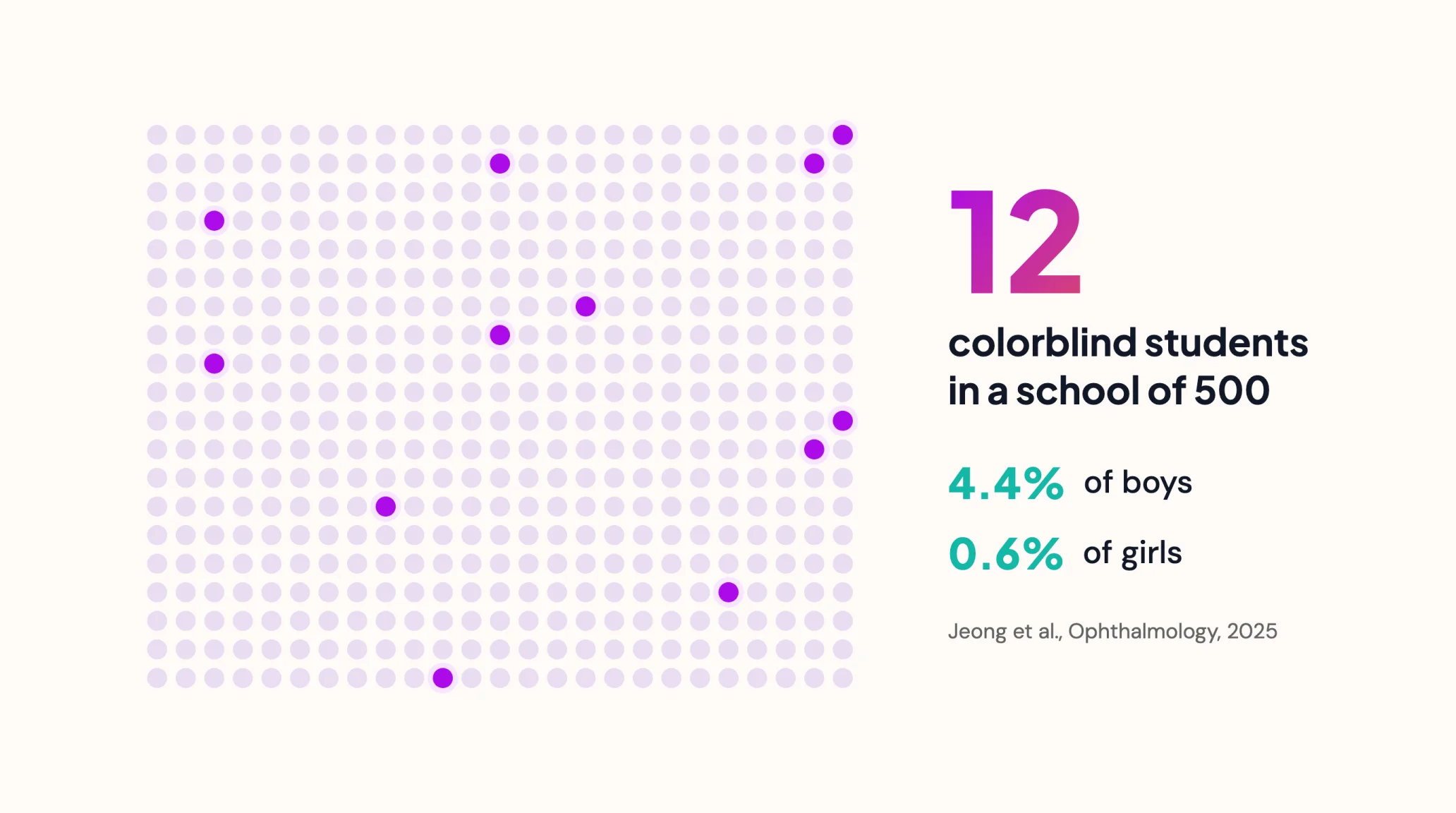
Color blindness in the classroom is more common than most teachers expect. A 2025 analysis of 1.7 million children and adolescents found that 4.4% of boys and 0.6% of girls have a color vision deficiency. That is about a dozen students in a school of 500.

Supporting them rarely costs anything. Most colorblind students do well once color stops being the only way information is shown.

What Does Color Blindness Look Like in the Classroom?

Color blindness means a student sees some colors differently or cannot tell certain colors apart. The most common type makes red and green hard to separate, according to the National Eye Institute. Signs teachers notice include:

  • Picking the wrong marker, or asking classmates which color is which
  • Mixing up lines on a graph or regions on a map
  • Missing corrections written in red pen
  • Struggling with color-coded keys and sorting tasks

If you see a pattern, let the family and school nurse know. A simple vision screening can confirm it.

About 12 colorblind students in a school of 500: 4.4% of boys and 0.6% of girls

504 Plan Accommodations for Colorblind Students

The most effective accommodation is simple: never let color carry meaning on its own. Many schools write this into a 504 plan, or add it to an existing IEP. Accommodations you can copy into a plan:

  • Every color used in instruction has a word, symbol or pattern
  • Graphs, maps and diagrams are labeled, not color-keyed
  • Feedback is written in black or dark blue, not red or green
  • Tests do not require naming colors, unless color is the skill
  • The student can ask an adult to confirm colors in labs and art

Extra time is not usually needed. Clear labels remove most of the barriers.
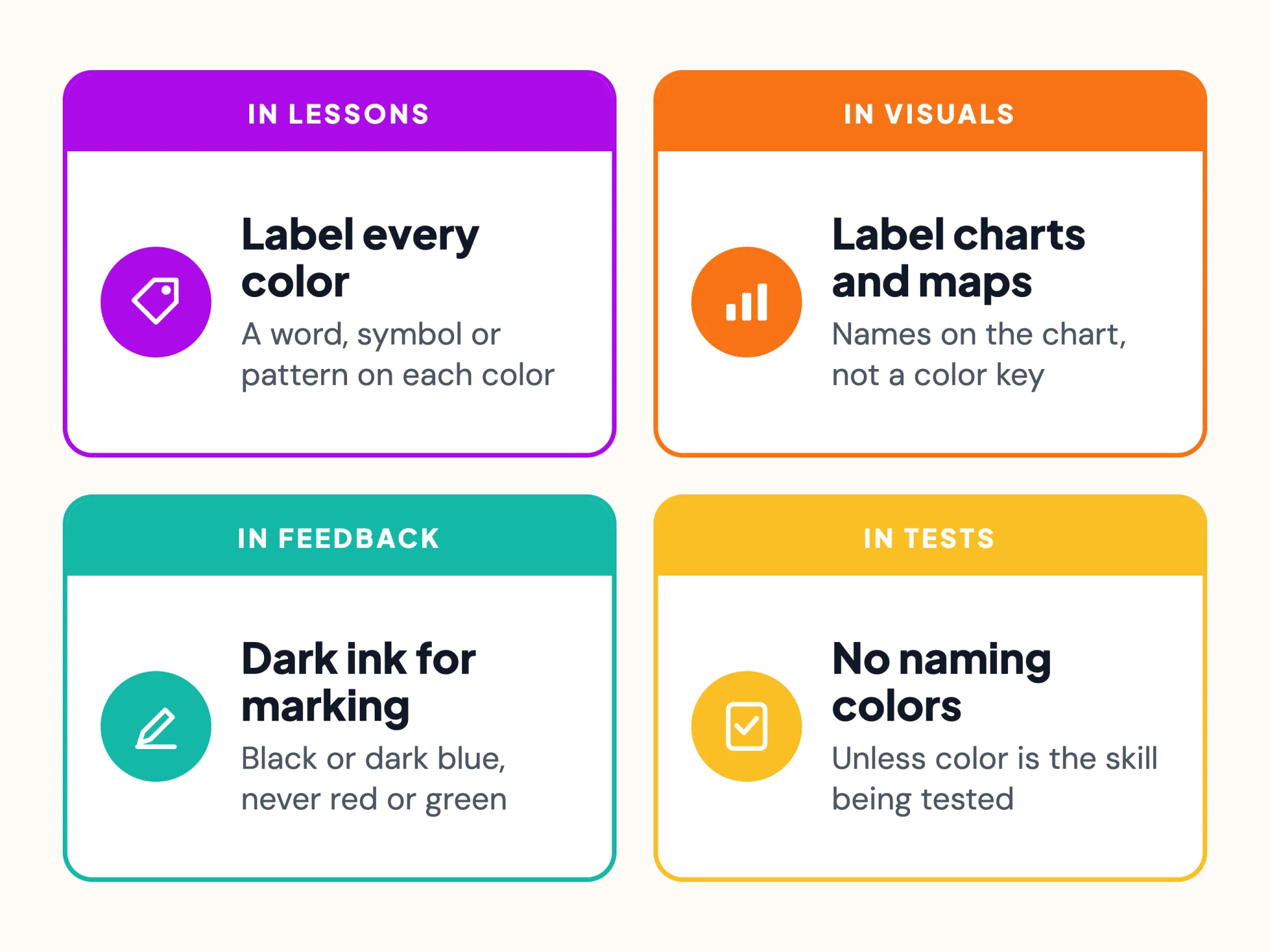
Four 504 accommodations for colorblind students: label every color, label charts and maps, dark ink for marking, no naming colors in tests

Making Slides and Worksheets Colorblind-Friendly

Most barriers sit in everyday slides and worksheets, and each takes a minute to fix. The WCAG guideline on use of color sums it up: color can support meaning but never carry it alone.

  • Use dark text on a light background, and avoid red and green together
  • Label chart slices and lines directly instead of using a color legend
  • In Google Forms, name the answer instead of "choose the green option"
  • Check the page in grayscale before sharing it

Chromebooks also have built-in color filters in their accessibility settings. Use them alongside labels, since a filter cannot tell a student what a color means.
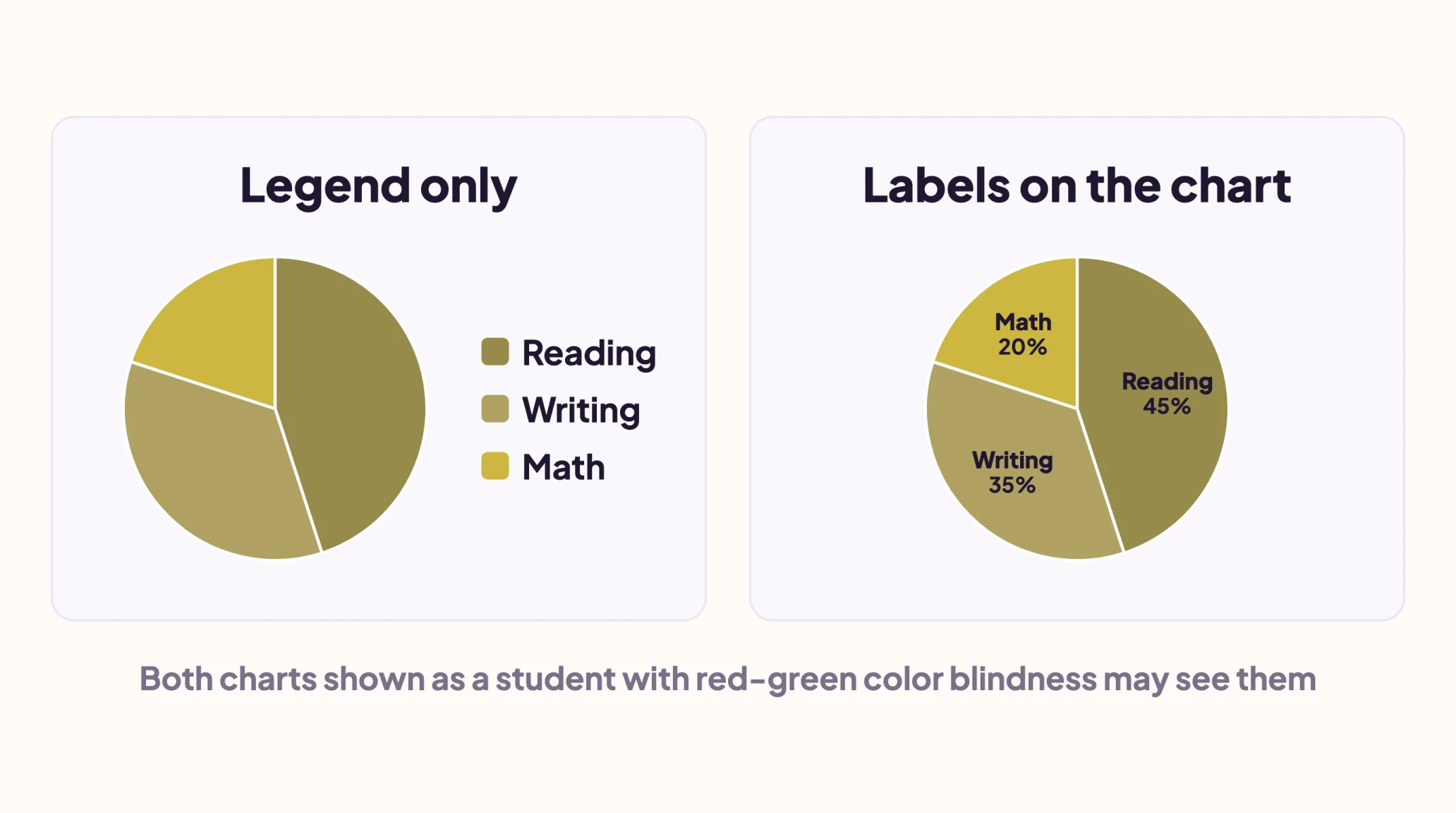
A legend-only pie chart next to a labeled pie chart, as seen with red-green color blindness

Color-Safe Highlighting with Mote

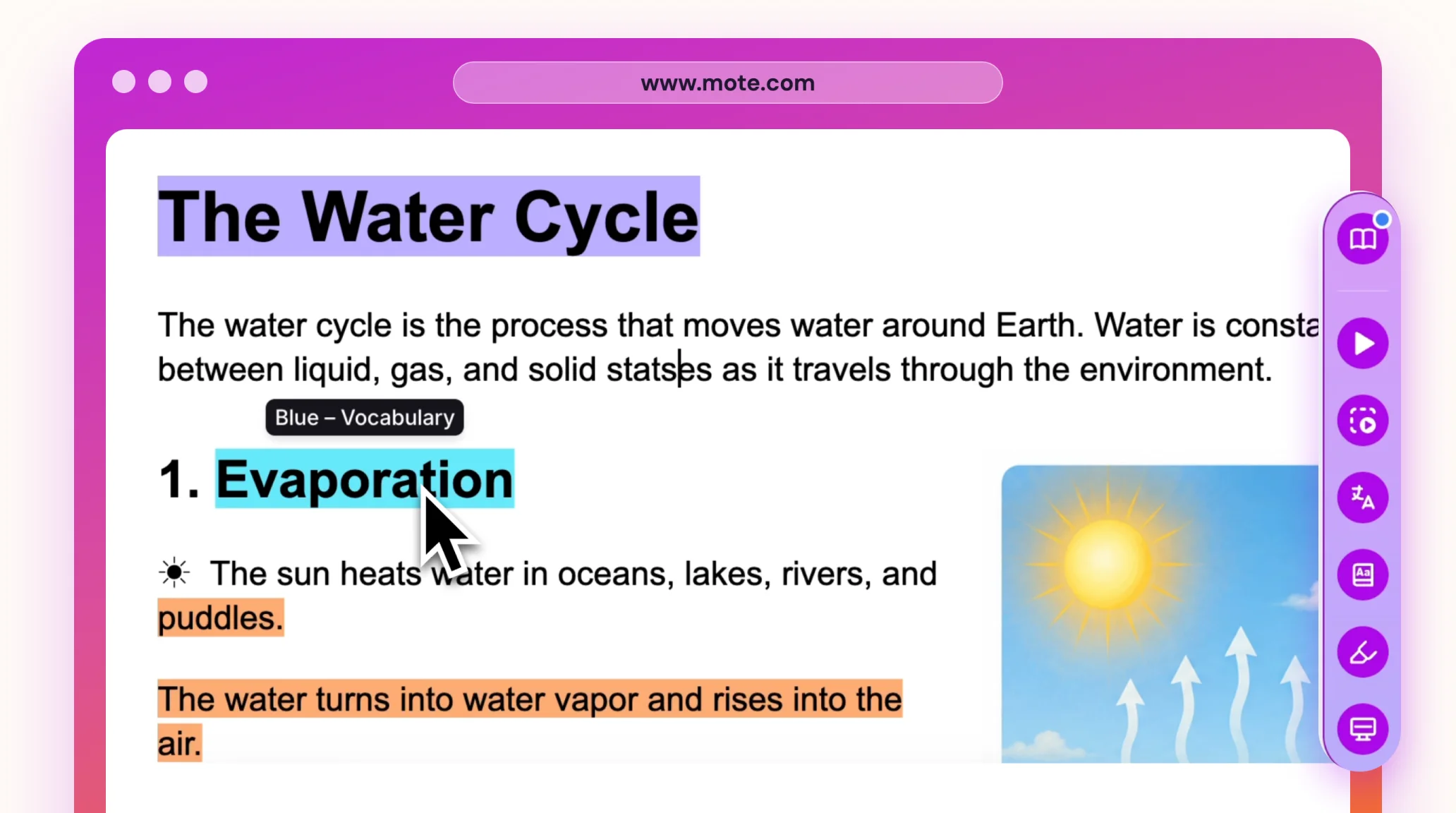
Color coding still works for colorblind students when every color has a name. The Mote Highlighter lets teachers and students label four of its colors, so yellow becomes "Main idea" and green becomes "Evidence". Hovering over a color shows its label.

Read Aloud also lets each student choose the color used to highlight the words being read, so they can pick one that stands out for them. Read more about assistive technology for students.
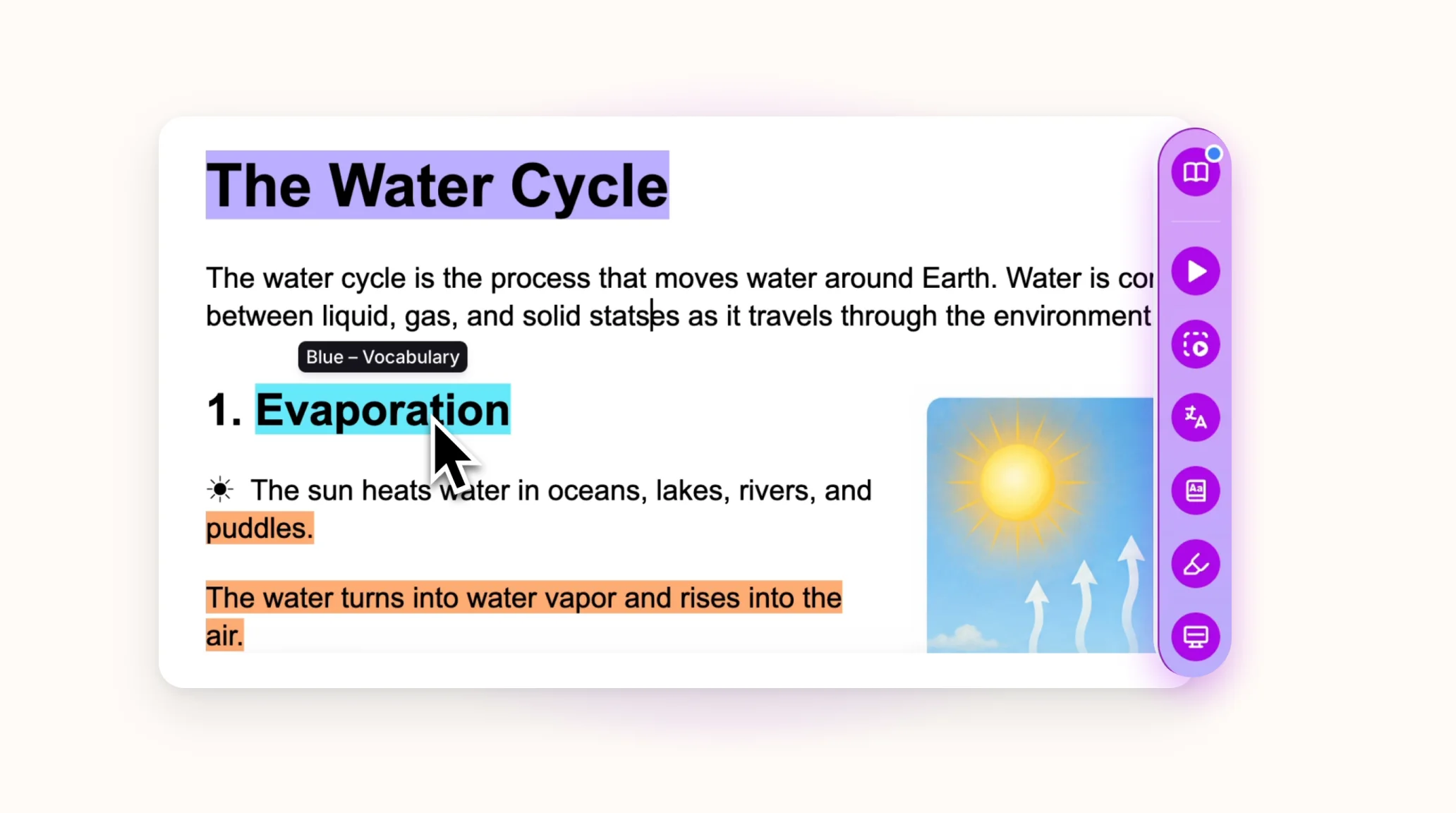
The Mote Highlighter on a Google Doc showing the Blue - Vocabulary label on a highlighted word

Label Every Color

Color blindness is common, lifelong and easy to plan for. Label every color you use, and colorblind students get the same lesson as everyone else. Supporting another need? See our guide to dyslexia classroom accommodations.
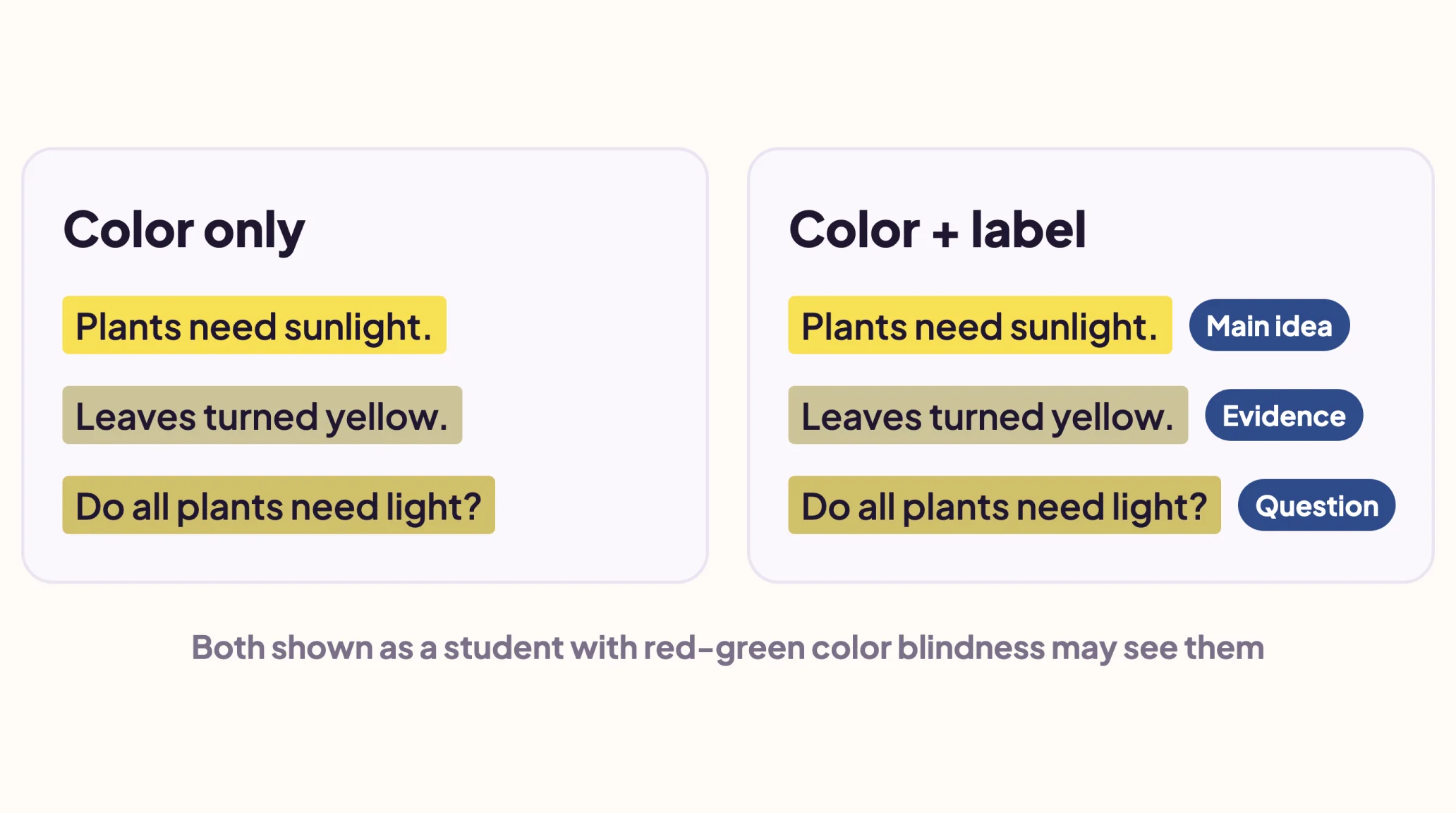
The same notes as a student with red-green color blindness may see them. Labels keep the meaning when the colors look alike.

How to Make a Lesson Colorblind-Friendly in 4 Steps

Requires:
Mote Chrome Extension, Google Docs or Slides

1. Find color-only meaning

Look for anything that only works if you can see the color: keys, charts, sorting tasks and red-pen marks.

2. Add a word to every color

Put a label, symbol or pattern next to each color so the meaning survives without it.

3. Label your highlighter colors

In the Mote Highlighter, select one of the four central colors, hover over its label and click the pencil icon to name it.

4. Check it in grayscale

Turn on your device's grayscale filter and review the page. Anything that stops making sense needs a label.

Frequently Asked Questions

Common questions about
Assistive Technology

Is color blindness a learning disability?

No. Color blindness is a difference in vision, not a learning disability, and it does not affect intelligence or the ability to learn. It can still create barriers when lessons rely on color, which is why schools support colorblind students with simple classroom accommodations.

Can a colorblind student get a 504 plan?

Yes, a colorblind student can be considered for a 504 plan when color vision affects their access to learning, because Section 504 covers impairments that limit major life activities such as seeing. Typical accommodations include labeled colors, patterned graphs and tests that do not depend on naming colors. Each school team decides eligibility case by case.

What are the signs of color blindness in children?

Common signs include mixing up colored markers or crayons, trouble reading color-coded graphs and maps, and missing feedback written in red. Some children quietly ask classmates which color is which. A vision screening by an eye doctor or school nurse can confirm it.

Do colorblind students need extra time on tests?

Usually not. Colorblind students rarely need extra time once test materials label colors with words, patterns or symbols. Removing the color barrier from the test is a better fix than adding time.

How do I make slides and worksheets readable for colorblind students?

Pair every color with a word, symbol or pattern, use dark text on a light background, and avoid red-green combinations. Then check the page in grayscale and add a label anywhere meaning disappears. Tools such as the Mote Highlighter, which lets you name each highlight color, keep color-coded notes clear.

Explore some more of Mote's features

Try Mote for free

No card required

© Mote Technologies, Inc. 2026. Brought to you with 💜 from our global team.