


MTSS Tiers Explained: A 2026 Guide to Tier 1, 2, and 3 Supports
Tier 1 reaches every student. Tier 2 supports those who need more. Tier 3 catches the few who need most. Here is what each MTSS tier looks like in practice.




If you have ever sat in a school leadership meeting and heard people debate whether a struggling reader is Tier 2 or Tier 3, you have already seen the MTSS tier system at work. The three-tier model is the operating logic behind every Multi-Tiered System of Supports framework in U.S. schools, and getting MTSS tiers right is what separates a working intervention system from a stack of well-meaning paperwork.
The MTSS Tier Model: A 30-Second Definition
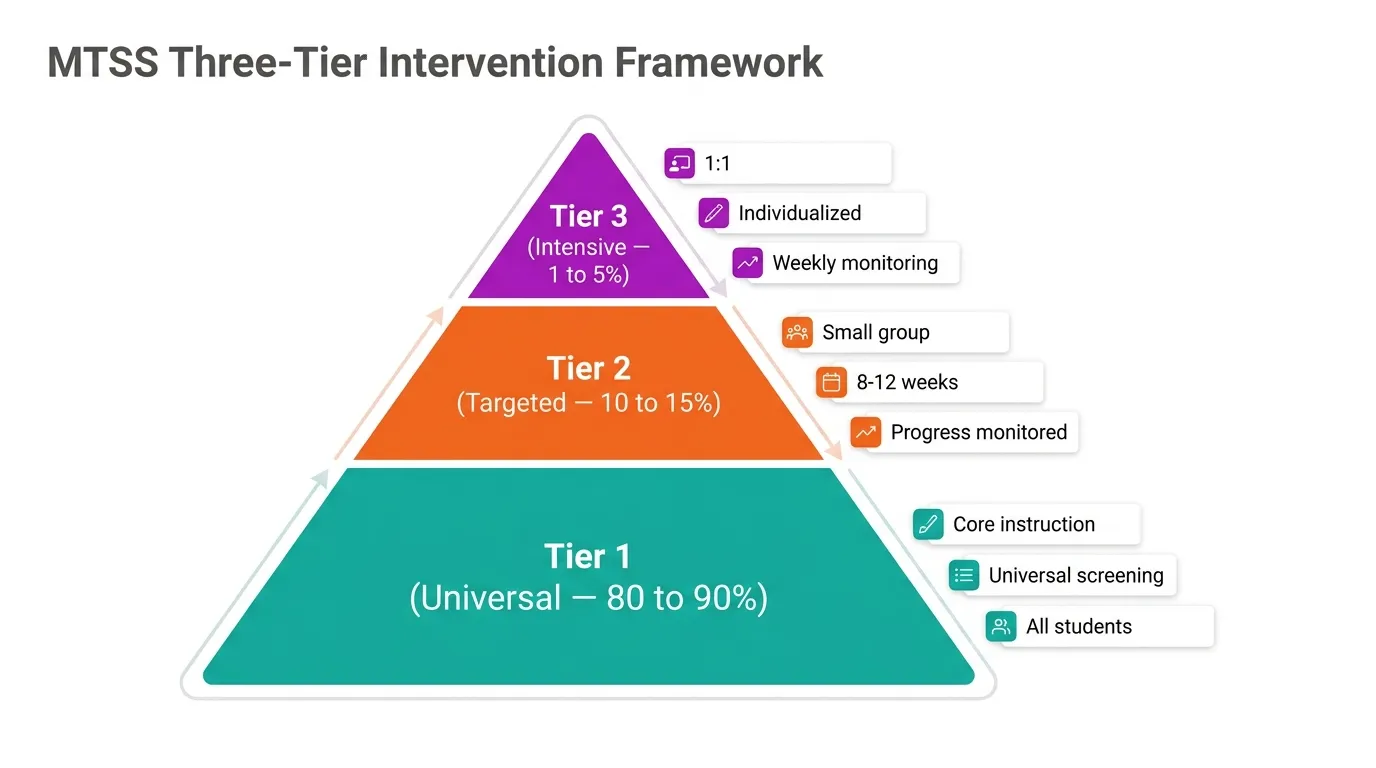
MTSS tiers are three levels of increasingly intensive student support, designed so every student gets the right amount of help at the right time. The proportions are well-established:
- Tier 1 (Universal): 80 to 90% of students. High-quality core instruction delivered to every student in the classroom.
- Tier 2 (Targeted): 10 to 15%. Supplemental small-group support for students who need more than Tier 1 alone.
- Tier 3 (Intensive): 1 to 5%. Individualized, intensive intervention for students with the greatest need.
The model is shared across MTSS and its predecessor, RTI. What makes MTSS distinct is that the same tier logic applies across academic, behavioral, and social-emotional domains, not just academics.
Tier 1: Universal Supports for 80 to 90% of Students
Tier 1 is the foundation. Every student in the school receives Tier 1 instruction, regardless of need or label. When Tier 1 is strong, the proportion of students needing Tier 2 or 3 stays small.
What Tier 1 includes:
- Evidence-based core curriculum delivered with fidelity
- Universal screening at least three times per year
- Differentiated instruction inside the classroom
- Universal accessibility supports such as text-to-speech, visual aids, and translation
- Classroom-level behavioral and SEL practices like PBIS routines
Tier 1 is where the most students are reached and where the largest gains in outcomes happen. If you only have time to invest in one tier, invest here.
Tier 2: Targeted Supports for 10 to 15% of Students
Tier 2 catches students whose data shows they need more than Tier 1 alone. Tier 2 is delivered in small groups, typically 3 to 5 students, with a defined intervention cycle of 8 to 12 weeks.
What Tier 2 looks like in practice:
- Supplemental, evidence-based intervention, not a replacement for Tier 1
- 30 to 45 minute sessions, 3 to 5 times per week
- Progress monitoring every 1 to 2 weeks
- Shared decision-making between classroom teacher and interventionist
- Clear exit criteria so students return to Tier 1 alone when ready
Tier 2 is where many MTSS implementations stall. The most common failure mode is using Tier 2 as a permanent placement rather than a time-bound intervention.
Tier 3: Intensive Supports for 1 to 5% of Students
Tier 3 is the most intensive level of support inside the general education framework. It is individualized, frequent, and tightly monitored.
Hallmarks of Tier 3:
- Individualized intervention plans tailored to a single student
- 1:1 or very small group delivery
- Daily sessions, often 45 to 60 minutes
- Weekly progress monitoring
- Strong overlap with IEP-required supports for some students
An important clarification: Tier 3 is not the same as special education. A student can receive Tier 3 supports without an IEP, and a student with an IEP may receive supports across all three tiers. The MTSS framework sits inside general education and complements special education when both are needed.
How Students Move Between Tiers
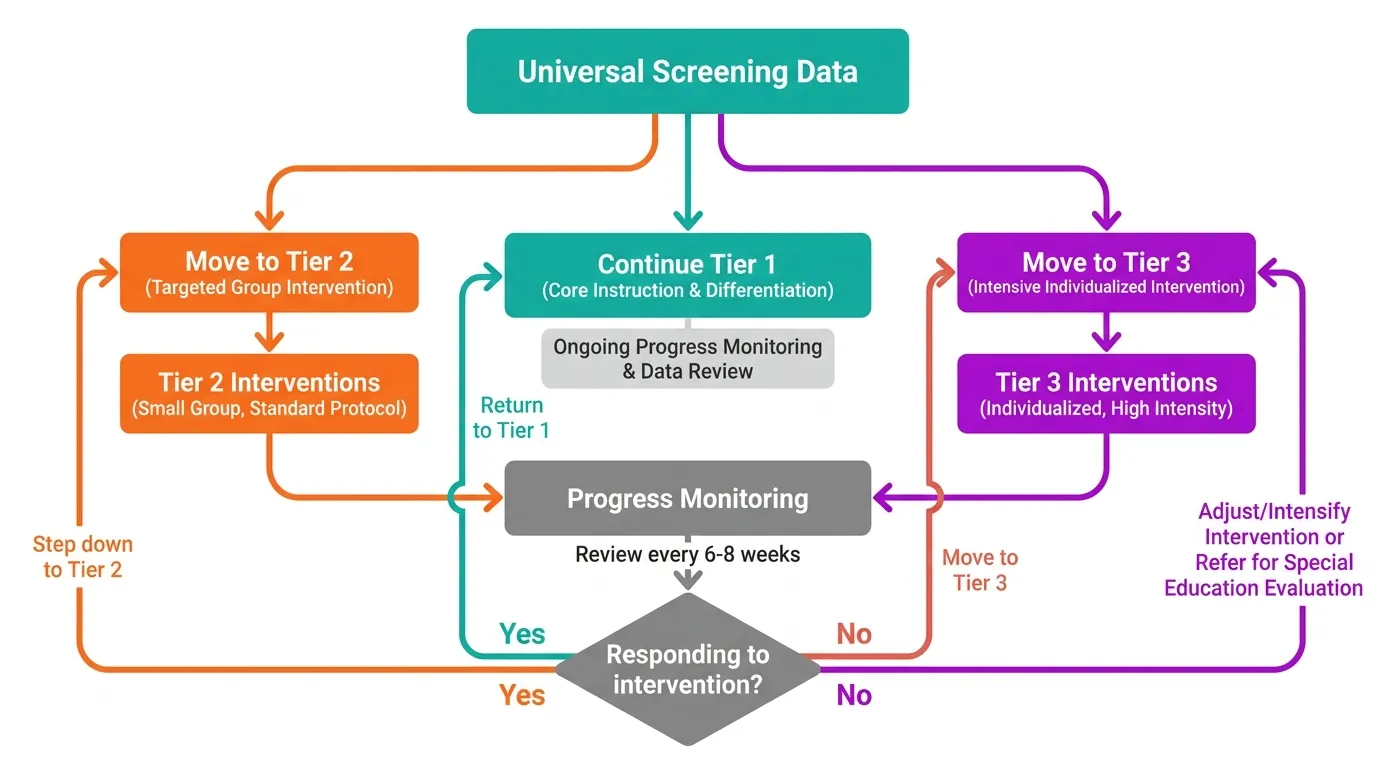
The decision to move a student up or down a tier should never be made by gut feel. It should be made by an MTSS team using three data inputs:
- Universal screening data for the broad indicator of where a student starts
- Progress monitoring data for the trend line showing whether the current tier is working
- Diagnostic data used at Tier 2 and 3 to identify specific skill gaps
The Center on MTSS at AIR recommends a 6 to 8 week minimum cycle at any tier before changing placement, with clear entry and exit rules documented in advance. Without those rules, Tier 2 becomes a parking lot and the system stops working.
Mote Features Mapped to Each MTSS Tier
Mote was built around the same tiered logic. Features map cleanly across the three tiers:
- Tier 1: Read Aloud, Screen Mask, Highlighter, and Translation are available to every student in the classroom with no flag, no label, and no setup per child.
- Tier 2: Text Prediction, Speech-to-Text, and voice feedback support small-group intervention work without singling students out from peers.
- Tier 3: IEP-aligned configurations, persistent custom voices, and admin-managed accommodations meet the most intensive needs at scale.
For deeper context on how Mote fits a full MTSS implementation, see our MTSS pillar guide.
Tiers Are Levels of Support, Not Labels for Students
The single most important thing to remember about MTSS tiers: they describe a level of support, not a category of student. A child may move between Tier 1 and Tier 2 multiple times in a school year, and that is the system working as designed. The framework job is to match the right intensity to the right need at the right time. Hard-coding students into a tier defeats the entire model.
.png)


.png)